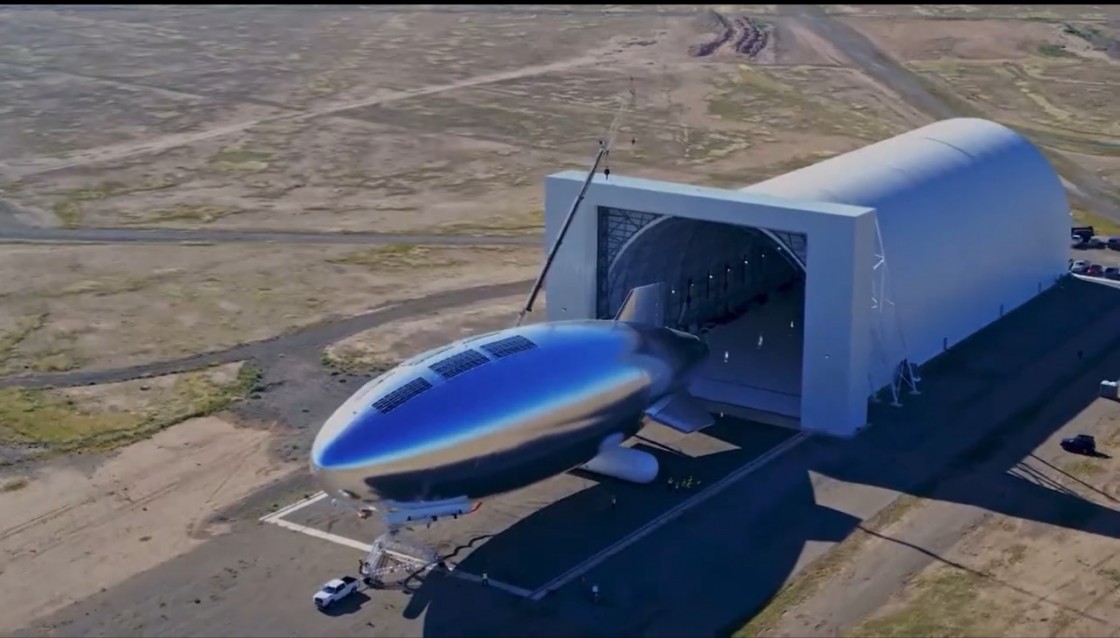
Sceye HAPS Specifications Include: Endurance, Payload And Breakthroughs In Battery
1. Specifications tell you what a Platform Can Actually Do
There’s a tendency within the HAPS sector to talk about ambitions instead of engineering. Press releases describe coverage areas agreement with partners, commercial timelines. But the most important and more relevant discussion is about specifications – which features the vehicle will actually carry, how long it actually remains up, and what energy systems make sustained operation possible. For anyone trying to understand the extent to which a stratospheric-sized platform is truly mission-capable, or even in the prototype phase, the payload capacity, endurance numbers and battery power are where the heart of the matter is. Ambiguity about “long endurance” and “significant payload” are easy. Delivering both simultaneously, at an altitude of above is the technical challenge that separates genuine programs from announcements that are wildly ambitious.
2. The Lighter-thanAir Architecture alters the Payload Equation
The primary reason that Sceye’s airship design has the capacity to carry significant payload is that buoyancy handles the fundamental task that keeps the vehicle moving. This isn’t a minor distinction. Fixed-wing solar aircrafts must generate aerodynamic lifting continuously this consumes energy, and also imposes structural restrictions that limit the additional mass the vehicle can sensibly transport. An airship that is floating in the stratosphere won’t expend energy fighting gravity the same manner — thus the power generated by its solar array, along with the structural capabilities of the vehicle itself, can be directed toward stations keeping, propulsion and payload operation. The result is an airship with a payload capacity fixed-wing HAPS designs with comparable endurance really struggle to match.
3. Capacity of Payload Determines Mission Versatility
The practical importance of higher capacity payloads is apparent as you think about the kind of stratospheric mission requirements actually are. A telecommunications payload – antenna systems or signal processing hardware beamforming equipment — has an actual weight and volume. So does a greenhouse gas monitoring suite. Additionally, there is a wildfire detection of earth observation. Running any one of these missions efficiently needs hardware with a mass. In order to run multiple missions simultaneously, you need more. Sceye’s airship specs are designed by the premise that a platform in the stratospheric region should be capable of carrying a practical combination of payloads than requiring operators to choose between connectivity and observation because the vehicle cannot accommodate both simultaneously.
4. Endurance Is Where Stratospheric Missions Are Winners or Losers
A platform that reaches high altitudes for a period of about 48 hours prior to having to drop is useful for demonstrations. An elevated platform that remains in place for a long period of time during the course of building commercial services. The distinction between those two scenarios is largely an energy matter, specifically, whether or not the vehicle is able to generate enough solar energy during daylight to operate all devices and recharge its batteries adequately to enable complete operation through the night. Sceye endurance targets are designed around the diurnal cycle issue with the idea of treating energy availability for overnight use not as an end-of-the-line goal instead as a principle that everything else is designed around.
5. Lithium-Sulfur batteries are a real Step towards a Reversal
The battery chemistry behind conventional consumer electronics and electric vehicles — mostly lithium-ion possesses densities that result in limitations for stratospheric endurance applications. Each kilogram of battery mass that you carry is a kilogram not available to payload, however you’ll need sufficient stored energy to keep a large platform operating in a stratospheric night. The chemistry of lithium-sulfur batteries alters this equation dramatically. With energy densities approaching 425 Wh/kg for lithium-sulfur batteries, they can store a lot more energy per pound than similar lithium ion cells. For a vehicle with a weight limit, where every grams of battery mass represents an opportunity cost in payload capacity improvement in energy density doesn’t just happen only incremental, but architecturally significant.
6. Solar Cell Efficiency Advances Are the other half of the Energy story
The battery’s energy density determines the amount of power it can store. Solar cell efficiency will determine how quickly you’ll be able to replenish it. Both matter, and progression in one area without progress in the other leads to a less-than-perfect energy architecture. Improved photovoltaic cells with high efficiency with multi-junction design which can absorb a wider range of solar energy compared to conventional silicon cells have substantially improved the power harvesting capacity of Solar-powered HAPS devices during daylight hours. Along with lithium sulfur storage, these developments make a true closed loop power system achievable, generating and storing enough energy per day to power all systems without any external energy input.
7. Station Keeping Draws Constantly From the Energy Budget
It’s easy to see endurance solely in terms of keeping up in the air, but with an stratospheric platform, staying in the air is only one aspect of the energy equation. Stationkeeping — actively maintaining a position against the stratospheric wind by propulsion that is continuous draws power constantly and represents a significant fraction of total energy use. The budget for energy must be able to accommodate station keeping along with payload operations, avionics, communications, and thermal management systems at the same time. This is why specifications with endurance numbers without describing the systems that are in operation throughout the endurance period are difficult to analyze. Real endurance numbers assume full operational load, not only a only minimally configured vehicle that coasts with payloads shut off.
8. The Diurnal Cycle is the Design Constrained from Which Everything Else is Flows from
Stratospheric engineers discuss the diurnal phase — the daily rhythm of availability of solar energyas the fundamental factor in the framework around which the platform is designed. At daytime the solar array needs to provide enough power to run every system, and then charge the batteries sufficiently. When night falls, the batteries must be able to last till sunrise without moving off, affecting performance of the payload or entering any kind or mode that would disrupt an ongoing monitoring or connectivity mission. In the design of a vehicle to thread this needle with a high degree of reliability every day of the week, throughout the duration of months is the primary engineering issue of solar-powered HAPS development. Every single specification choice including solar array size and battery chemistry, propulsion efficiency, power draw for the payload — feeds into this single key constraint.
9. The New Mexico Development Environment Suits This Kind of Engineering
Testing and developing a stratospheric airship requires infrastructure, airspace, and atmospheric conditions that aren’t available everywhere. Skeye’s home base is New Mexico provides high-altitude launch and recovery capabilities, crystal clear blue skies suitable for conducting solar experiments which also gives access kind of wide, uninterrupted airspace long-term flight testing needs. As a company in the aerospace industry of New Mexico, Sceye occupies an exclusive position, that is focused on stratospheric lighter technologies, and not the rocket launch systems that are more commonly seen in the vicinity. The level of engineering expertise required to confirm endurance claims and the battery’s performance under actual stratospheric conditions is exactly the kind of work that can be benefited by a dedicated test space instead of sporadic flight missions elsewhere.
10. The Specs that Stand Up Under the scrutiny of commercial Partners Have to have
In the end, the main reason that specs matter, beyond technical concern, is that the commercial partners making investments must know that the numbers are accurate. SoftBank’s plan to create a nationwide HAPS network in Japan and announcing pre-commercial services by 2026, is based by the assurance that the Sceye platform will perform as described in operational conditions — not just in controlled tests, but throughout the time a commercial network requires. The capacity of the payload that is stable even with a complete telecommunications as well as observation suites on board endurance figures verified through actual stratospheric operations, as well as battery performance proven over real daily cycles are what make a promising aerospace program into a telecoms infrastructure that a major operator is prepared to stake its plans for network expansion on. Have a look at the recommended sceye haps airship payload capacity for website recommendations including high-altitude platform stations definition and characteristics, sceye haps airship payload capacity, Cell tower in the sky, Cell tower in the sky, sceye haps airship payload capacity, what does haps, Stratospheric telecom antenna, Stratospheric missions, Stratosphere vs Satellite, softbank group satellite communication investments and more.
Fire And Disaster Detection In The Stratosphere
1. The Detection Window is the most Valuable Thing You Can Extend
Every major catastrophe comes to a point which is often measured in minutes, or sometimes even hours — when early awareness could have altered the course of action. A wildfire identified when it extends to half an hectare is an issue of containment. The same fire that is discovered that covers 50 hectares is a catastrophe. A gas leak at work that is identified within the first 20 minutes can be controlled before it becomes a national health emergency. The same leak that was detected three hours later, through the use of a ground report, or even a spacecraft passing overhead on a scheduled revisit, has already dispersed into a problem with not a clear solution. Extending the detection window is probably the most significant feature that improved monitoring infrastructures can provide, and continuous stratospheric monitoring is among the very few ways to alter the window in a meaningful way, rather than insignificantly.
2. Fires are becoming more difficult to Control With the Current Infrastructure
The frequency and scale of wildfires in the last few decades has exceeded the monitoring infrastructure that was designed to monitor them. Networks of detection based on ground — sensors, watchtowers and watchtowers patrols of rangers — have a limited coverage and operate too slow to detect fast-moving fires early in their development. Aircraft response is effective but expensive, weather-dependent, and reactive rather than anticipatory. Satellites travel over a area on a timetable measured in hours. This means a fire that ignites in the air, spreads, and is crowned between passes does not provide any early warning at all. The combination of larger fires speedier spread, increased rates of spread triggered through drought, as well as complicated terrain results in a monitoring gap that conventional approaches aren’t able to close.
3. Stratospheric Altitude Provides Persistent Wide-Area Visibility
A platform that operates up to 20 kilometres over the surface will maintain visibility throughout a land area that is hundreds of kilometres with fire-prone regions, coastlines, forest margins and urban edges simultaneously and without interruption. The platform isn’t like aircrafts in that it doesn’t require fuel refills. It’s not like satellites. disappear off the horizon when on an annual revisit cycle. For wildfire detection, this type of wide-area monitoring means the platform is watching when sparks are ignited, observing as fire spreads, and watching as the behavior of fire changes — providing a continuous stream of data instead of a set of disconnected snapshots emergency personnel have to interpolate between.
4. Both Thermal And Multispectral Sensors May Detect Fires Even before smoke is visible.
A number of the most useful techniques for detecting wildfires don’t wait to see visible signs of smoke. Thermal infrared sensors recognize heat irregularities consistent with ignition, before the fire is able to produce any visible signs It can identify hotspots among dry vegetation as well as smouldering fires under the canopy of forests and the initial heat signature of fires beginning to establish themselves. Multispectral imaging can be further enhanced by detecting changes within the vegetation situation — moisture stress dried, browning and drying- that indicate elevated threat of fire in a particular area before any ignition occurs. A stratospheric platform that has the combination of these sensors will provide alerts in advance of active ignition and an in-depth understanding of where the next ignition is most likely to occur. This is a qualitatively different type of awareness of the situation than traditional monitoring delivers.
5. Sceye’s Multipayload approach combines detection with Communications
One of major complication of large-scale disasters is how the infrastructure that people depend on for communication including mobile towers power lines, internet connectivity and so on — is often one of the first objects to be destroyed, or flooded. A stratospheric platform with both disaster detection sensors as well as a telecommunications payloads tackle this issue from one vehicle. Sceye’s approach to mission development is to consider connectivity and observation as complementary functions rather than competing one, so the system that detects a growing wildfire is also able to provide emergency communications to the responders in the ground whose terrestrial networks are dark. The cellphone tower in the sky does more than just observe the disaster but also keeps people connected via it.
6. Emergency Detection Goes Beyond Wildfires
Although wildfires are among many compelling applications for ongoing stratospheric monitoring the same platform features are useful across a wider array of disaster scenarios. Flood events can be tracked through the evolution of floods across regions of the coast and rivers. Earthquake-related aftermaths — such as compromised infrastructure, blocked roads and displaced communitiesare benefited by rapid, broad-area assessment that ground teams are not able to do quickly enough. Industrial accidents that release the toxic gas or oil into coastal waters generate signatures detectable by appropriate sensors from stratospheric altitude. Finding out about climate catastrophes at a moment’s time across all these areas requires a monitoring layer that is constantly in place monitoring the environment, constantly, and capable of distinguishing between typical variations in the climate and the signs of developing emergency situations.
7. Japan’s disaster profile makes the Sceye Partnership Especially Relevant
Japan has a significant share of the world’s seismic phenomena, is subject to regular periods of typhoons that afflict zones along the coast and has witnessed a number of industrial accidents which require rapid environmental monitoring. The HAPS collaboration has been formed between Sceye and SoftBank, targeting Japan’s nationwide network and services that will be available in 2026, is between high-speed connectivity to the stratosphere and monitoring capabilities. A country with Japan’s high disaster exposure and technological sophistication may be the ideal early adopter of stratospheric infrastructure combining the resilience of coverage with real-time monitoring as well as the communication backbone is essential for disaster response and the monitoring layer that early warning systems require.
8. Natural Resource Management Benefits From the Same Monitoring Architecture
The ability to sense and maintain that make stratospheric platforms highly effective in the fight against wildfires and natural disasters can be applied directly to natural resource management. These functions operate on longer timescales but require similar monitoring continuities. Monitoring of forest health — tracking disease spread the spread of a disease, illegal logging, and vegetation alteration — is a benefit of long-term observation that detects the slow development of problems before they develop into acute. Water resource monitoring across vast catchment areas coastal erosion tracking and monitoring of protected areas from invasion all are examples of applications where a stratospheric platform watching continuously produces actionable intelligence that periodic spacecraft or satellite surveys are not able to replace cost-effectively.
9. The Founder’s Mission is the Basis for Why it is so important to detect disasters.
Understanding why Sceye is so focused on environment monitoring and disaster detection rather than considering connectivity as the primary mission and monitoring as a second benefitand that requires understanding the founder philosophy that Mikkel Vestergaard gave to the company. The experience of applying modern technology to massive humanitarian issues produces a different set of designs than a strictly commercial telecoms business would. The ability to detect and prevent disasters cannot be implemented on a new connectivity platform as a value-added feature. This is an indication of a belief that the stratospheric infrastructure must be actively used in cases of emergencies — climate disasters, environmental catastrophes, humanitarian emergencies, etc. more timely and accurate information impacts the outcome for the affected population.
10. Continuous Monitoring alters the relationship Between Data and Decision
The more fundamental shift that catastrophe detection at the stratospheric level enables can’t be just quicker responses to individual events — it’s a change in the way decision makers view risks to the environment over time. When monitoring is intermittent the decisions regarding resource deployment, preparation for evacuation, and infrastructure investments must be taken in a state of great uncertainty about the current conditions. If monitoring is constant and constant, this uncertainty shrinks drastically. Emergency managers using the real-time data feed of a continuous stratospheric platform that is above the area of their responsibility are taking decisions from a very different point of view than the ones who rely on scheduled satellite passes and ground reports. That shift — from periodic snapshots into continuous information-sharing is what makes stratospheric earth observation by means of platforms such those created by Sceye actually transformative instead of infrequently beneficial. Check out the most popular softbank investment sceye for site info including sceye connectivity solutions, Wildfire detection technology, sceye haps airship status 2025 2026 softbank, space- high altitude balloon stratospheric balloon haps, what are haps, Stratospheric telecom antenna, Stratospheric infrastructure, softbank haps pre-commercial services japan 2026, Sustainable aerospace innovation, softbank sceye partnership haps and more.